|
The story is simple: after the
successful invasion of England Germany tries to invade the USA. They need
aircraft to do that but they have only got a few carriers (the Graf Zeppelin and some captured
British carriers). To free the decks of the carriers for bombers they convert the He-162 to a
waterplane.
This He-162W is a very capable aircraft compared to the piston engined aircraft the US operates.
However it has its drawbacks. The guns on the He-162W are very capable but to slow firing for fighter to fighter combat.
The He-162W where therefore used for ground attack and bomber interception whist the carrier born Ta-152T and Me-262T take on the fighters.
Furthermore, these early jet engines where too fragile for saltwater operations.
More He-162W where lost to engine troubles then to enemy fire. The He-162W
were therefore quickly relegated to second line duties, such as training. They preferably operated from shore at fresh water lakes.
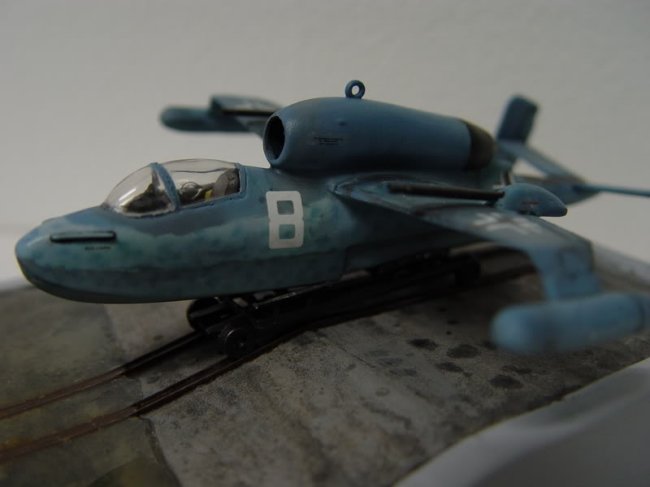
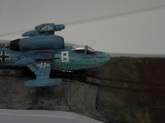
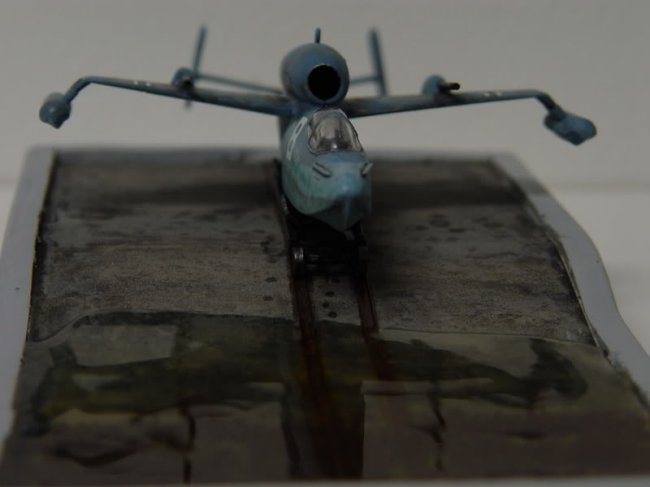
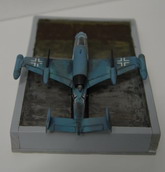
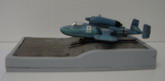
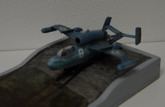
The He-162W (white 8) pictured here is from an unknown training squadron operating from the occupied French part of lake Geneva.
Click on
images below to see larger images
Heinkel had experience with
waterplanes and jets, so they are the natural candidate to make the world first water based jet aircraft.
Using the He-162 as a base they developed the He-162W (W for Wasser = water).
First thing was creating a stable waterplane a floating hull was developed with outboard
floats on the wing tips. The cannons had to be moved from their low position. Out on the wings the water spray was a problem for the guns but inward was worse because of the gun gasses.
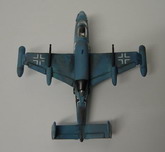
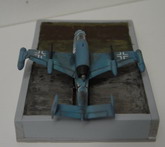
This "what if" has been made with an old Revell/Frog (reissue?) 1/72 He-162. The hull has been cut of and a Matchbox Fairey Seafox float has been made to fit (With lot's of puttying and sanding) Guns are from a Italeri Caprioni, beaching gear is a modified bombtrolley, outer floats are fuel tanks from a Hasegawa J7.
The base is made from an old wooden box, the tarmac is sandpaper, rails are Evergreen styreen profiles. The water was made with EZ water, a plastic the you can melt and pour.
Borg R3-MC0
Click on
images below to see larger images
|